The Book of Genesis is the foundation of the Bible, filled with stories of creation, faith, and God’s promises. From the creation of the world to Joseph’s rise in Egypt, these chapters reveal God’s plan for humanity and His unwavering faithfulness.
Explore this 24-section outline of Genesis, where each story highlights lessons of trust, obedience, and hope. Whether you’re reading for inspiration or Bible study, these stories show how God works through every generation to fulfill His promises.
Genesis 1–2: God Creates the World
In Genesis 1–2, God creates the entire universe in six days. Light, sky, land, seas, plants, animals, and finally humanity are brought into existence by His word. Adam and Eve are placed in the beautiful Garden of Eden, a perfect home designed for harmony with God. These chapters highlight God’s infinite creativity, order, and the special role humans have as caretakers of His creation.
God gives humans the gift of choice and responsibility, setting the foundation for morality and relationship with Him. The story shows the goodness of creation and God’s perfect plan. “In the beginning, God created the heavens and the earth” (Genesis 1:1), reminding us that all life comes from His power and love.

Genesis 3: The First Sin in Eden
In Genesis 3, Adam and Eve face temptation in the Garden of Eden. The serpent deceives Eve, leading both of them to eat the forbidden fruit from the Tree of Knowledge. This act of disobedience introduces sin into the world, separating humanity from God and bringing consequences like shame, toil, and mortality. Despite this, God shows mercy, providing clothing for Adam and Eve, demonstrating His care even in judgment.
This chapter teaches the importance of obedience and the reality of human weakness. God also promises future redemption, foreshadowing salvation through Christ. “For all have sinned and fall short of the glory of God” (Romans 3:23), reminding us that even in failure, God’s plan for redemption is steadfast.

Genesis 4–5: Cain, Abel & Genealogy
Genesis 4 tells the story of Adam and Eve’s sons, Cain and Abel. Cain, out of jealousy, kills his brother Abel, committing the first murder. This tragic event shows the destructive power of sin and the consequences of anger and envy. Despite this, God protects Cain and provides a mark as a sign of His mercy, demonstrating that even in judgment, God’s care remains.
Genesis 5 records the genealogy from Adam to Noah, highlighting the spread of humanity and the continuity of God’s plan. Each generation shows God’s faithfulness despite human imperfection. “Do not be overcome by evil, but overcome evil with good” (Romans 12:21) reminds us that God’s goodness can triumph over human sin.

Genesis 6–7: Noah and the Flood
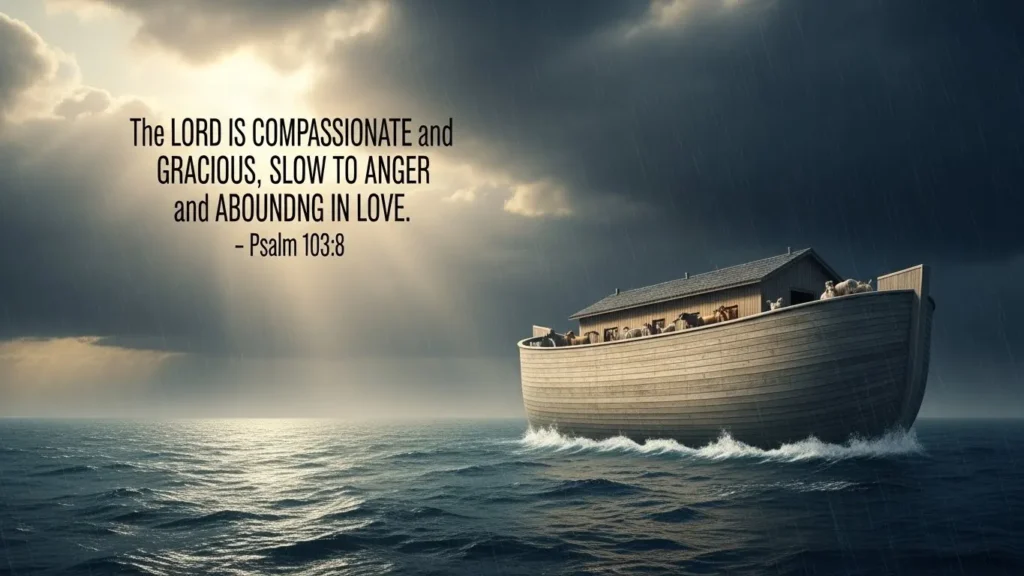
In Genesis 6–7, humanity’s wickedness grows, and God decides to cleanse the earth with a great flood. Noah, a righteous man, is chosen to build an ark and preserve his family and pairs of every animal species. The story emphasizes obedience, faith, and God’s judgment tempered with mercy, showing that those who trust and follow God are protected even in difficult times.
Noah’s faithfulness and perseverance remind us to trust God’s plan, even when it seems impossible. After the flood, God establishes His covenant and promises never to destroy the earth with water again. “By faith Noah, being warned by God, prepared an ark to save his household” (Hebrews 11:7).
Genesis 8–9: Ark Rest & Rainbow Promise
In Genesis 8, the floodwaters recede, and Noah’s ark comes to rest on Mount Ararat. Noah, his family, and the animals leave the ark, stepping into a renewed world. This moment symbolizes God’s faithfulness and the opportunity for a fresh start. Noah offers sacrifices to God, showing gratitude and worship, highlighting the importance of honoring God after deliverance.
In Genesis 9, God establishes His covenant with Noah and all living creatures, promising never to destroy the earth with a flood again. The rainbow becomes a lasting symbol of hope, mercy, and God’s unchanging faithfulness. “I have set my rainbow in the clouds, and it will be the sign of the covenant” (Genesis 9:13).

Genesis 10–11: Nations and Babel
Genesis 10 records the descendants of Noah’s sons—Shem, Ham, and Japheth—showing how nations spread across the earth after the flood. This genealogy highlights God’s plan for humanity’s growth and diversity. Each family and nation carries forward God’s purpose, demonstrating His guidance even as humans expand and multiply across the world.
In Genesis 11, humanity attempts to build the Tower of Babel to reach the heavens. God confuses their languages, causing them to scatter across the earth. This story shows the consequences of pride and self-reliance while emphasizing God’s sovereignty. “Pride goes before destruction, a haughty spirit before a fall” (Proverbs 16:18) reminds us to trust God rather than our own plans.

Genesis 11: Abraham’s Family Line
Genesis 11 traces the genealogy from Shem to Abram (later Abraham), highlighting God’s careful guidance in preserving His chosen line. Each generation shows God’s faithfulness, even as humanity grows and spreads across the earth. This chapter reminds us that God works through families and generations to fulfill His divine plan, preparing the way for His covenant promises.
Abraham’s lineage is a key part of God’s redemptive plan for humanity, demonstrating that His promises are never forgotten. “The LORD has established His throne in heaven, and His kingdom rules over all” (Psalm 103:19) reminds us that God’s plan unfolds perfectly through time.

Genesis 12–13: God Calls Abraham
In Genesis 12, God calls Abram (later Abraham) to leave his homeland and go to a land He would show him. God promises to make Abram into a great nation, bless him, and bless all the families of the earth through him. Abraham obeys, demonstrating faith and trust in God’s guidance, even without knowing the future. His journey marks the beginning of God’s covenant relationship with His chosen people.
In Genesis 13, Abraham and Lot separate peacefully to avoid conflict, showing wisdom and humility. God reaffirms His promise, assuring Abraham that his descendants will inherit the land. “Trust in the LORD with all your heart and lean not on your own understanding” (Proverbs 3:5) reminds us that obedience and faith lead to God’s blessings.

Genesis 14–15: Abraham Rescues Lot & Covenant
In Genesis 14, Abraham courageously rescues his nephew Lot after he is taken captive during a regional war. With faith and determination, Abraham defeats stronger kings and restores peace. He gives glory to God for the victory, showing humility and trust. This chapter highlights Abraham’s leadership, bravery, and reliance on God rather than personal power or wealth.
Genesis 15 records God’s powerful covenant with Abraham. God promises countless descendants and assures him that his faith is credited as righteousness. This moment strengthens Abraham’s trust in God’s promises. “Abram believed the LORD, and He credited it to him as righteousness” (Genesis 15:6).

Genesis 16–17: Hagar, Ishmael & Covenant
In Genesis 16, Sarai gives her servant Hagar to Abraham, leading to the birth of Ishmael. This decision, made in impatience, brings conflict and pain. Yet God sees Hagar in her distress and promises blessings for her son. This chapter reminds us that God cares deeply for those who feel forgotten or mistreated.
Genesis 17 reveals God reaffirming His covenant with Abraham. God changes Abram’s name to Abraham and Sarai’s to Sarah, promising that nations and kings will come from them. Circumcision becomes the sign of this everlasting covenant. “I will establish My covenant as an everlasting covenant” (Genesis 17:7).

Genesis 18–19: Isaac Promised & Sodom
In Genesis 18, God visits Abraham and promises that Sarah will give birth to a son, Isaac, despite her old age. Abraham also intercedes for the people of Sodom, showing compassion and concern for righteousness. This chapter highlights God’s power to fulfill promises and His willingness to listen to faithful prayers.
Genesis 19 describes the destruction of Sodom and Gomorrah because of their wickedness. Lot and his family are rescued, revealing God’s mercy toward the righteous. This story reminds us that God is both just and merciful. “Is anything too hard for the LORD?” (Genesis 18:14).

Genesis 20–21: Abraham and Isaac’s Birth
In Genesis 20, Abraham’s faith is tested when he encounters King Abimelek. God protects Sarah and reveals His power by intervening, reminding Abraham that God’s promises cannot be hindered by human fear or mistakes. This chapter shows God’s faithfulness even when His servants struggle with trust.
Genesis 21 celebrates the fulfillment of God’s promise with the birth of Isaac. Sarah’s joy replaces years of waiting, proving that God’s timing is perfect. Though Hagar and Ishmael depart, God continues to care for them. “Is anything too hard for the LORD?” becomes a living testimony through Isaac’s birth.
Genesis 22: Abraham Tested with Isaac
Genesis 22 presents one of the most powerful tests of faith in the Bible. God asks Abraham to sacrifice his beloved son Isaac. Trusting God completely, Abraham obeys without hesitation. At the last moment, God provides a ram as a substitute, showing that He never intended harm but desired Abraham’s faithful obedience.
This chapter teaches us that true faith involves trust even in the hardest moments. God proves Himself as the Provider, reinforcing that He is worthy of complete surrender. “The LORD will provide” (Genesis 22:14) stands as a timeless reminder of God’s faithfulness in every trial.

Genesis 23–24: Sarah’s Burial & Isaac Marries
Genesis 23 records the death of Sarah and Abraham’s purchase of a burial place in Canaan. This act shows Abraham’s faith in God’s promise of the land, even while living as a foreigner. Honoring Sarah reflects love, respect, and trust that God’s covenant would continue through future generations.
Genesis 24 tells the beautiful story of Isaac’s marriage to Rebekah. God clearly guides Abraham’s servant, answering prayer step by step. This chapter highlights God’s involvement in daily decisions and relationships. “He has not withheld His kindness and faithfulness” (Genesis 24:27).

Genesis 25–26: Jacob, Esau & Covenant
Genesis 25 introduces the birth of twins, Jacob and Esau, whose lives would shape Israel’s future. Esau sells his birthright for a single meal, revealing how easily spiritual blessings can be undervalued. This chapter reminds us that choices matter and that God’s plans often unfold through unexpected paths and people.
Genesis 26 focuses on Isaac, as God reaffirms the covenant made with Abraham. Despite famine and opposition, Isaac obeys God and is blessed. God’s faithfulness across generations is clearly shown. “I will be with you and will bless you” (Genesis 26:3).

Genesis 27–28:Jacob Gets Blessing & Ladder Dream
In Genesis 27, Jacob receives his father Isaac’s blessing through deception, creating conflict with his brother Esau. Though Jacob’s actions are flawed, God’s greater plan continues to unfold. This chapter reminds us that God’s purposes are not stopped by human weakness or mistakes.
Genesis 28 reveals Jacob’s dream of a ladder reaching heaven, with angels ascending and descending. God promises to be with him wherever he goes. This encounter transforms Jacob’s journey into one guided by God’s presence. “Surely the LORD is in this place” (Genesis 28:16).

Genesis 29–31: Jacob’s Marriages & Family
In Genesis 29–31, Jacob builds his family while serving his uncle Laban. He marries Leah and Rachel and becomes the father of many children who will form the twelve tribes of Israel. Despite deception and hardship, God blesses Jacob’s work and increases his household, showing that His promises remain active even in difficult situations.
These chapters highlight patience, perseverance, and God’s faithfulness. Jacob learns that God’s blessing is not dependent on human fairness but on divine purpose. “The LORD has seen my hardship” (Genesis 31:42) reminds us that God notices every struggle and remains faithful.
Genesis 32–33: Jacob Wrestles & Reconciles
In Genesis 32, Jacob wrestles with God during the night and refuses to let go until he receives a blessing. This powerful encounter changes his name to Israel, marking a transformation in his faith and identity. It shows that spiritual growth often comes through struggle, prayer, and complete dependence on God.
Genesis 33 tells the story of Jacob’s emotional reunion with Esau. Instead of revenge, forgiveness and reconciliation take place. God heals broken relationships and fulfills His promise of protection. “I saw your face as though I had seen the face of God” (Genesis 33:10).

Genesis 37: Joseph’s Dreams and Betrayal
In Genesis 37, Joseph, the favored son of Jacob, shares dreams that suggest he will one day rule over his family. His brothers, consumed by jealousy, sell him into slavery in Egypt. Despite betrayal and hardship, God’s providence is at work, setting the stage for Joseph’s later rise and the fulfillment of His plan.
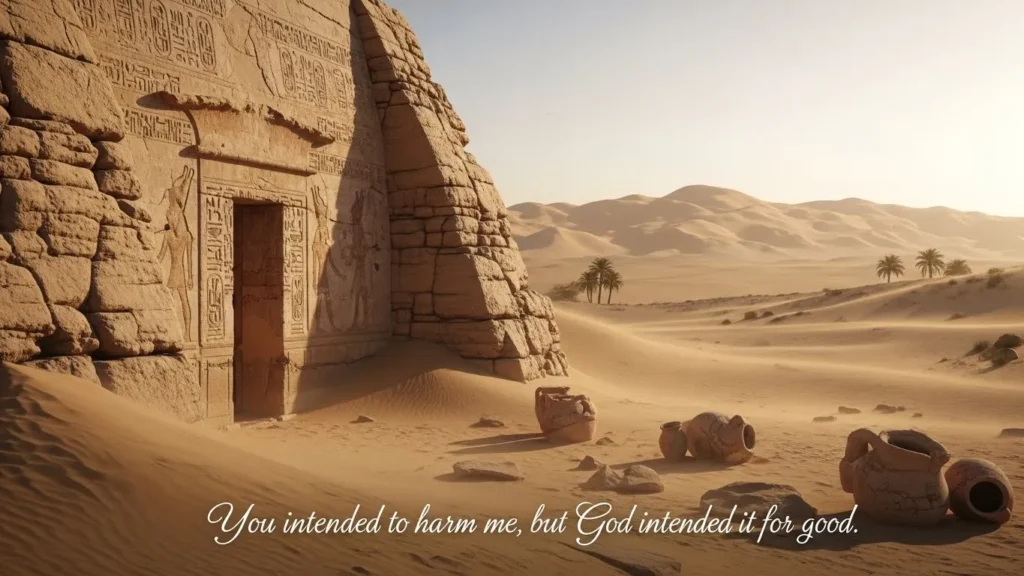
This chapter reminds us that envy and human sin can’t stop God’s purposes. Even when circumstances seem unfair, faith and trust in God provide hope. “You intended to harm me, but God intended it for good” (Genesis 50:20).

Genesis 39–41: Joseph in Egypt
In Genesis 39, Joseph faces trials in Egypt, including false accusations and imprisonment. Despite these hardships, God’s favor remains with him, showing that faithfulness and integrity are always rewarded. Joseph rises through patience, wisdom, and trust in God’s guidance.
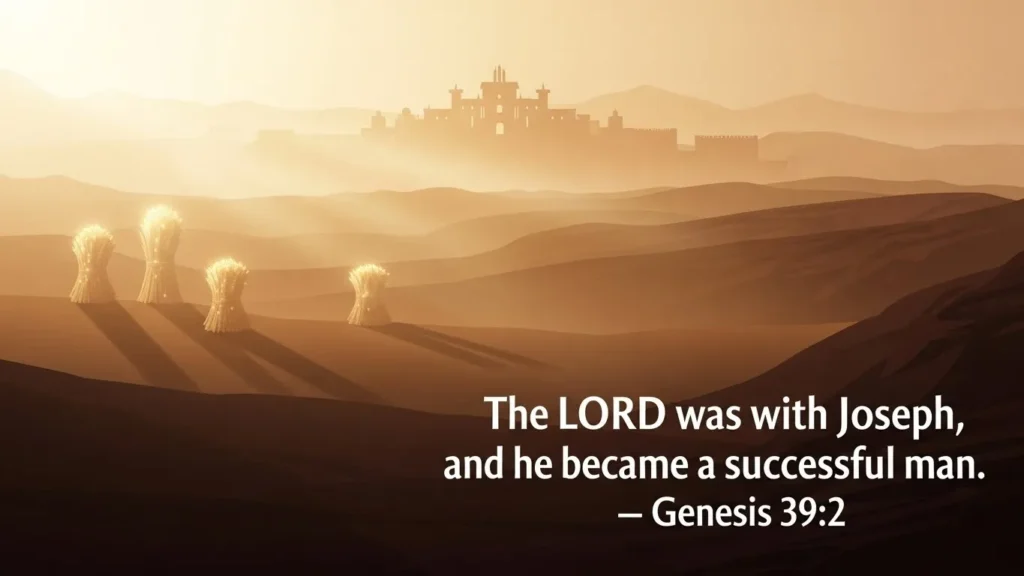
Genesis 40–41 shows Joseph interpreting dreams for Pharaoh and eventually becoming second-in-command over Egypt. He wisely prepares for a coming famine, saving countless lives. “The LORD was with Joseph, and he became a successful man” (Genesis 39:2) reminds us that God’s presence transforms trials into triumphs.
Genesis 42–45: Joseph Tests & Forgives Brothers
In Genesis 42–43, Joseph’s brothers come to Egypt to buy grain during the famine, unaware that he now holds power. Joseph tests their hearts, seeing whether they have changed. This demonstrates God’s wisdom and the importance of repentance, patience, and growth in character.
By Genesis 44–45, Joseph reveals his identity and forgives his brothers, saving his family and the nation. God’s providence turns betrayal into blessing, showing that forgiveness restores relationships and fulfills His plan. “You intended to harm me, but God intended it for good” (Genesis 50:20).

Genesis 46–47: Jacob Moves to Egypt
In Genesis 46, Jacob and his entire family move to Egypt to join Joseph, who provides for them during the famine. This relocation shows God’s faithfulness, as His promises to Abraham and Isaac continue through generations. Jacob’s trust in God allows his family to survive and thrive in a foreign land.
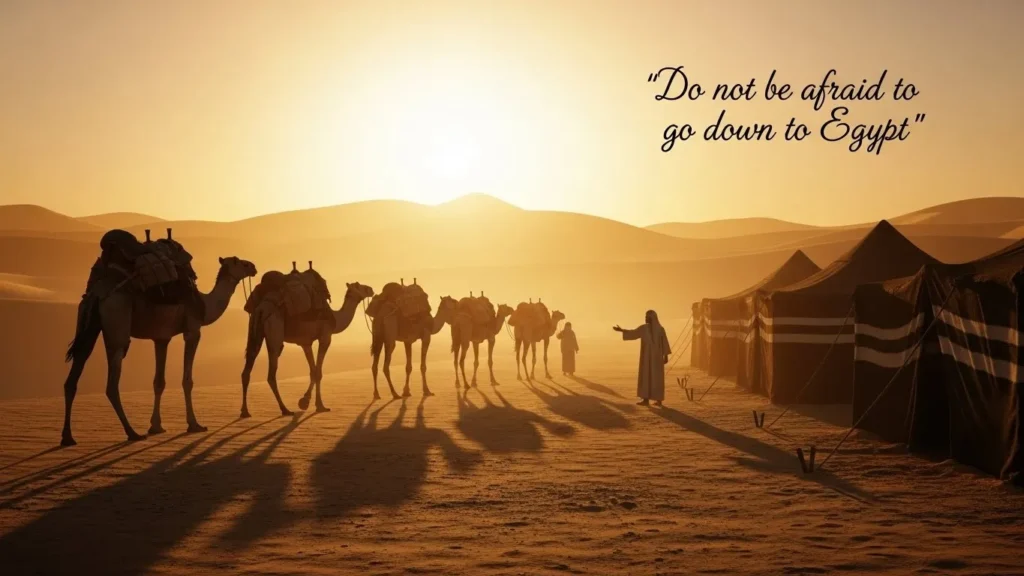
Genesis 47 highlights Joseph’s wise administration, saving Egypt and his family from famine. God’s providence is evident as He turns hardship into blessing. “I am the LORD, the God of your fathers; do not be afraid to go down to Egypt” (Genesis 46:3).
Genesis 48–49: Jacob Blesses His Sons
In Genesis 48, Jacob blesses Joseph’s sons, Ephraim and Manasseh, showing God’s favor and the passing of spiritual inheritance to the next generation. His blessings emphasize faithfulness, God’s promises, and the shaping of Israel’s tribes. Jacob demonstrates wisdom and trust in God’s plan, even as his life nears its end.
Genesis 49 records Jacob blessing all his twelve sons, predicting their futures and tribes’ roles in Israel’s story. His words reveal God’s providence and the importance of faith and obedience. “The LORD will watch over you” (Genesis 49:22) reminds us that God’s guidance endures across generations.

Genesis 50: Death of Jacob and Joseph
Genesis 50 concludes the story of God’s faithfulness through the lives of Jacob and Joseph. Jacob dies in Egypt, and Joseph honors his father with a proper burial in Canaan, showing respect and trust in God’s promises. This chapter reminds us that God’s covenant spans generations and that His plan continues even after loss.
Joseph’s leadership and faith remain strong as he reassures his brothers, showing forgiveness and trust in God’s providence. “You intended to harm me, but God intended it for good” (Genesis 50:20) perfectly sums up the message of Genesis: God works through all circumstances to bring about His purpose.