1. Social Influence
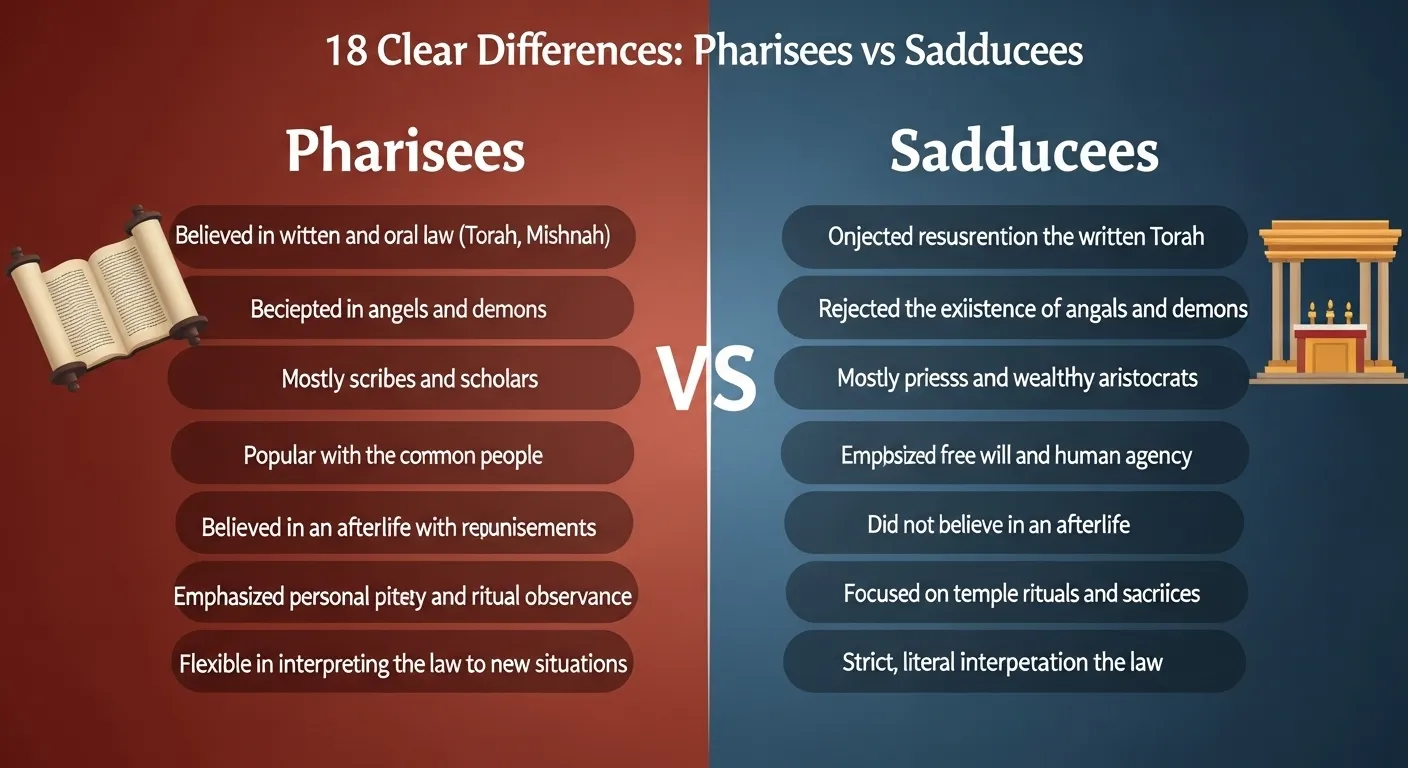
The Pharisees held strong influence among ordinary people because they taught in synagogues and lived close to daily community life. Their focus on tradition made them relatable to common families and local gatherings.
Sadducees, however, were connected to wealthy, aristocratic families. Their influence came from their power positions in the temple. They were known for political authority rather than connection to the everyday people.

2. Interpretation of Scripture
Pharisees believed in both the written law and the oral traditions passed down over generations. They emphasized teaching interpretation and applying rules to everyday situations.
Sadducees rejected oral tradition and followed only the written Torah. They viewed additional teachings as unnecessary and held a stricter, literal approach. This difference created ongoing debates between both groups.

3. Belief in Resurrection
The Pharisees firmly believed in the resurrection of the dead and the existence of the afterlife. This belief gave them hope in final judgment and reward for righteousness.
Sadducees completely denied resurrection. They believed life ended at death, and there was no eternal judgment. Their views shaped how they saw justice and spiritual responsibility.

4. Angels and Spirits
Pharisees accepted the existence of angels, spirits, and supernatural beings. They believed these beings interacted with the world and fulfilled God’s purposes.
Sadducees rejected angels and spiritual beings. Their belief system was more earthly, denying invisible realms. This major difference shaped their teaching and influence in temple discussions.

5. Role in the Temple
Pharisees focused on teaching in synagogues across the community, making them reachable by common families. They emphasized spiritual understanding over ritual control.
Sadducees controlled leadership positions in the temple. Their authority centered on rituals, sacrifices, and temple decisions. They held powerful roles handed down through prestigious families.

6. Political Connections
Pharisees avoided close ties with political rulers. They preferred to influence through teaching rather than government involvement. They kept their identity separate from Roman power.
Sadducees worked closely with political leaders, including the Romans. Their status and wealth depended on these connections, allowing them to maintain temple authority. Their cooperation made them powerful but unpopular.

7. Population Size
Pharisees had a much larger following. Many people admired their teachings, and their presence spread across towns and villages. Their ideas shaped the future of Judaism.
Sadducees were fewer in number, mostly from elite families. Their small group held high-status roles but lacked wide public support. Their influence was strong but limited.

8. Lifestyle Approach
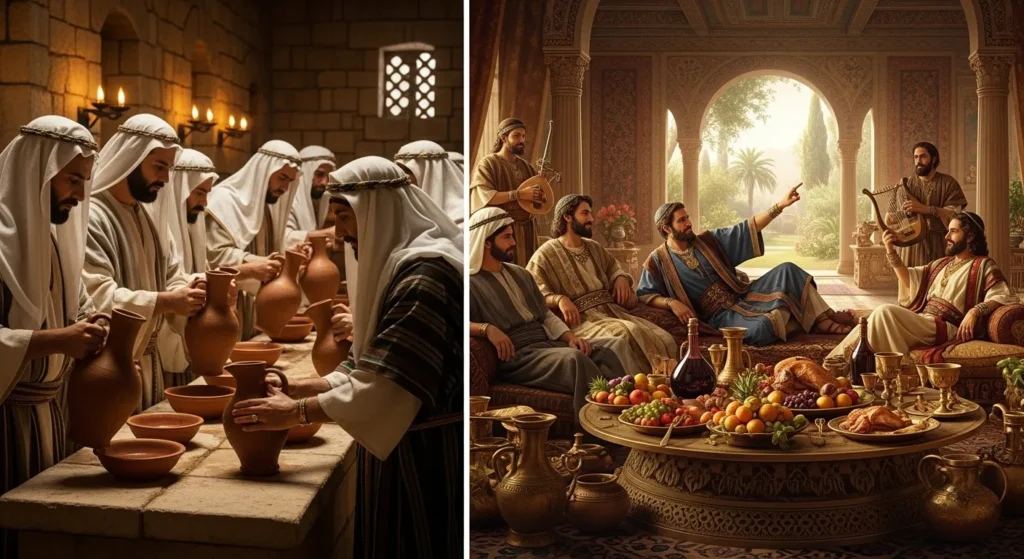
Pharisees practiced strict personal discipline, following detailed laws related to purity, prayer, and daily living. Their devotion inspired respect among communities.
Sadducees lived with more freedom, focusing mainly on temple rituals rather than strict personal lifestyle rules. Their approach was more flexible and less demanding.
9. Reaction to Jesus
Pharisees debated Jesus frequently, questioning His teachings because He challenged their traditions. Their confrontations were theological and interpretive.
Sadducees opposed Jesus mainly because His influence threatened their political stability and temple authority. They feared His message would upset the Romans.

10. Leadership Structure
Pharisees operated as teachers and scholars. Their leadership came from study, character, and influence in local gatherings. Anyone devoted to learning could rise among them.
Sadducees held hereditary positions. Leadership passed through family lines, giving them long-standing temple control. Their status was gained by birth, not study.

11. View on Law Enforcement
Pharisees believed every aspect of life should follow law and tradition. They focused on applying rules to everyday actions. Their goal was complete obedience to God’s law.
Sadducees emphasized temple law but were less strict about daily actions. They cared most about rituals performed properly and maintaining temple purity.

12. Relationship With the People
Pharisees were admired by many because they lived in close connection with the community. People sought them for spiritual guidance and understanding.
Sadducees were respected for authority but not loved. Their wealth and government ties made them appear distant and disconnected from ordinary life.

13. Torah vs Tradition
Pharisees blended Torah with oral tradition to interpret life situations. They believed tradition protected the law and guided spiritual growth.
Sadducees relied on Torah alone. They rejected added traditions because they believed only written law came directly from God.

14. View of Purity
Pharisees taught purity rules for everyone, not only priests. They believed holiness should shape everyday living.
Sadducees focused purity rules mainly on temple priests. Their view was centered around ritual rather than daily lifestyle purity.

15. Afterlife Judgments
Pharisees believed in reward and punishment after death. This belief supported moral responsibility and justice beyond earthly life.
Sadducees taught that judgment happened only in life. Once life ended, so did accountability. This shaped their practical and earthly outlook.

16. Historical Survival
Pharisee ideas survived beyond the destruction of the temple in AD 70. Their teachings shaped modern Judaism.
Sadducees lost influence after the temple was destroyed because their identity centered on temple rituals. Without the temple, their group disappeared.

17. Use of Synagogues
Pharisees relied heavily on synagogues for teaching, prayer, and debate. This made their influence widespread.
Sadducees focused on the temple alone. Their authority depended entirely on temple ceremonies and leadership roles.

18. Spiritual vs Political Focus
Pharisees emphasized spiritual growth, teaching, and moral guidance. Their strength was theological depth.
Sadducees prioritized political stability, temple control, and cooperation with authorities. Their power came from position rather than teaching.